
Start with what you can measure
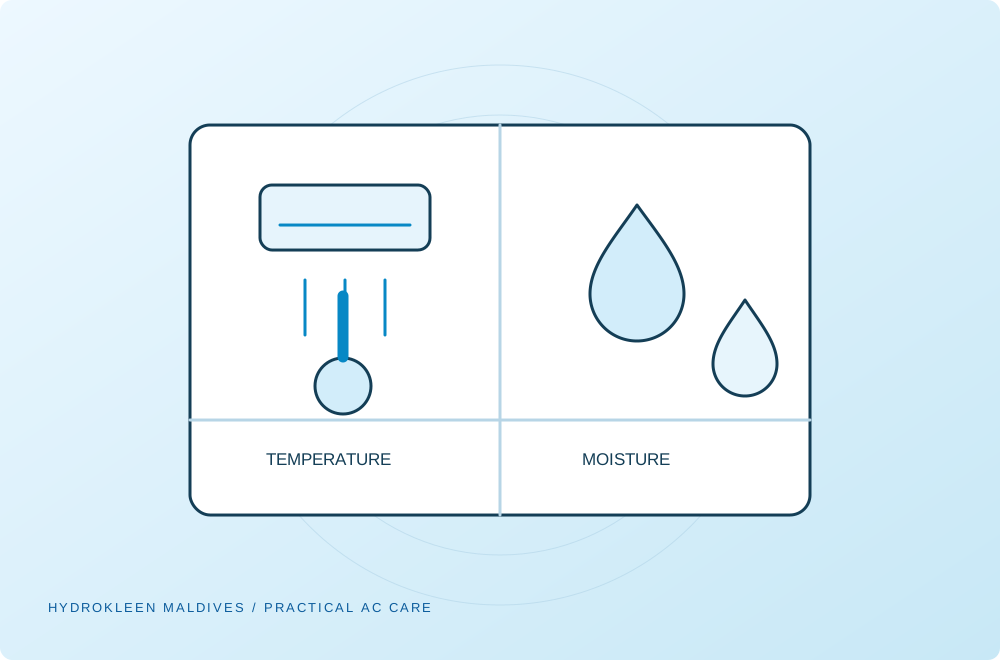
A room can reach its set temperature and still feel clammy. A small humidity meter helps you describe what is happening rather than judging by temperature alone. Note the reading at different times, whether the AC is running, and whether windows or doors are open. These observations give a technician a more useful starting point.
Cooler is not always drier
A lower thermostat setting does not fix a moisture source. The EPA advises controlling moisture and keeping indoor humidity below 60% where possible, ideally around 30–50%. The right approach depends on the building and conditions.
Look for the source
Condensation, plumbing leaks, damp materials and moisture from cooking or showering can all matter. Deal with leaks promptly and use the building’s appropriate kitchen and bathroom extraction. If dampness or visible mould keeps returning, arrange an assessment of the moisture problem rather than repeatedly covering or spraying the affected area.
Before you contact us
- Record the room temperature and humidity, if you have a meter.
- Photograph condensation, leaks or affected surfaces.
- Tell us when the dampness appears and how the room is used.
- Share the AC model and any recent installation or service work.
Choose the next step around the cause
Tell us when your room feels damp and share any humidity readings, leaks or condensation you have noticed. We can assess your AC and discuss whether cleaning, drainage work, ventilation or dedicated dehumidification needs consideration.